
What makes Patek Philippe's Annual Calendar series of complications so special?
The core of Patek Philippe's Annual Calendar series lies in its patented, practical complication mechanism, introduced in 1996, which requires adjustment only once a year at the end of February. This mechanism balances precise display, innovative movement, aesthetic design, and collectible value, striking a golden balance between a simple calendar and a perpetual calendar. Here are the key highlights:
I. Core Technology and Practical Value
Patented Automatic Recognition Mechanism: The first Annual Calendar, Ref. 5035, was patented in 1996. It automatically distinguishes between 30/31-day months, requiring manual adjustment only once a year from February 28/29 to March 1st. This significantly reduces maintenance costs and solves the problem of ordinary calendars needing to be adjusted five times a year. The mechanical architecture is minimalist and efficient: primarily using gears and gear shafts, reducing rocker arms and levers, resulting in a more stable structure and lower failure rate; for example, the Cal. 324 S QA LU movement has approximately 328 parts, balancing complexity and durability.
replica audemars piguet watches
replica richard mille sapphire
Highly compatible with multiple functions: It can be combined with moon phase (with an error of approximately 1 day per century), chronograph, world time, travel time, etc., such as the 5905 (annual calendar + chronograph) and 5326 (annual calendar + travel time), offering rich functionality without being cumbersome.
II. Movement and Adjustment Experience
Main Movement Lineup
Movement Model Compatible Models Core Configuration Power Reserve
Cal.324 S QA LU Nautilus 5905, Calatrava 5205 Automatic winding, annual calendar + moon phase, 4Hz frequency, 35-45 hours
Cal.26-330 S QA LU 24H 5396 series Annual calendar + moon phase + 24-hour display, 35-45 hours
Cal.324 S QA 24H Aquanaunt 5660 Annual calendar + 24-hour display, some models COSC certified, 30-45 hours
Easy Adjustment: The crown allows for easy adjustment of the date, time zone, etc., without the need for additional buttons, making it user-friendly for daily use.
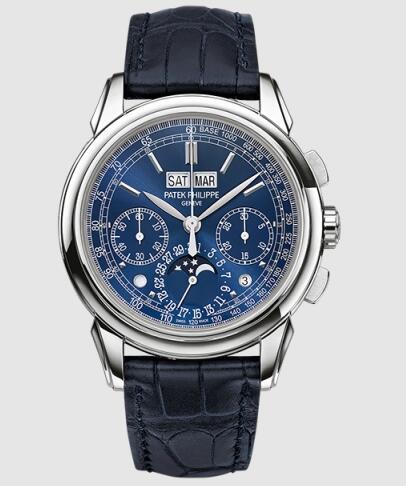
III. Balance of Design and Wearability
Classic Display Layout: A dual day/month window at 12 o'clock + a date window at 6 o'clock (e.g., 5396), or a pointer-style day/month + date window (e.g., 4947), ensuring clear and easy readability.
Diverse Materials and Sizes: Available in steel, rose gold, white gold, and platinum, with sizes ranging from 38-42mm, suitable for formal occasions, sports, and travel, such as the 5905P (platinum) and 4947/1A (steel).
Exquisite Aesthetic Details: The dial features sunburst, enamel, and guilloché finishes, with optional diamond-set hour markers, balancing elegance and recognizability.
IV. Positioning and Collectible Value
Prominent Historical Status: The 1996 patent revolutionized the calendar layout, setting a benchmark for modern "practical complications," prompting subsequent brands to follow suit and solidifying its industry position.

No comments:
Post a Comment